 Weighing
Determining Sample Moisture with a Moisture Analyzer vs. a Drying Oven

Measuring sample moisture with a moisture analyzer takes minutes, while oven drying takes hours. Because of this speed difference, many labs abandon the classic method, even though a moisture analyzer doesn't give accurate results for every material. Below we explain how to prepare the sample, set the mode, and understand which method suits your task.
In this article you'll learn how the methods differ, how to choose sample weight and temperature, how to check repeatability, and where to find balances, moisture analyzers, and drying ovens for a specific procedure. We'll also cover the rapid moisture method: when it saves a shift and when it causes problems at goods receipt.
What sample moisture is and why labs measure it
Moisture is the fraction of water that a sample loses when dried to constant mass. It's expressed as a percentage of the initial mass. This parameter affects grain grade, shelf life of bulk materials, ingredient dosing in production, reagent stability, and finished product quality.
Labs measure moisture in three typical situations: incoming raw material inspection, process control, and arbitration disputes with suppliers. The method determines how quickly you can make a decision on a batch. If you need to keep the line running without downtime, the rapid method matters. For a customer report or GOST acceptance, the drying method is often required.
It's important to agree upfront which moisture you're talking about. There's total moisture removed by drying and surface moisture, which evaporates faster. A moisture analyzer shows mass loss on heating; a drying oven shows the same loss but under different duration and conditions. If the procedure references GOST, you can't change the method arbitrarily.
Each sample type—grain, soil, food ingredients, polymers—has its own procedure with a specific temperature and sample mass. Follow that, not general recommendations.
Measuring sample moisture in the lab is also a chance to review where you're losing time. If sample prep is slow and results are needed by lunch, it makes sense to streamline: first a rapid estimate, then a control measurement. That way you don't delay acceptance or pile up samples on the shelf.
The drying oven method: principle, dishes and weighing bottles, temperature regimes
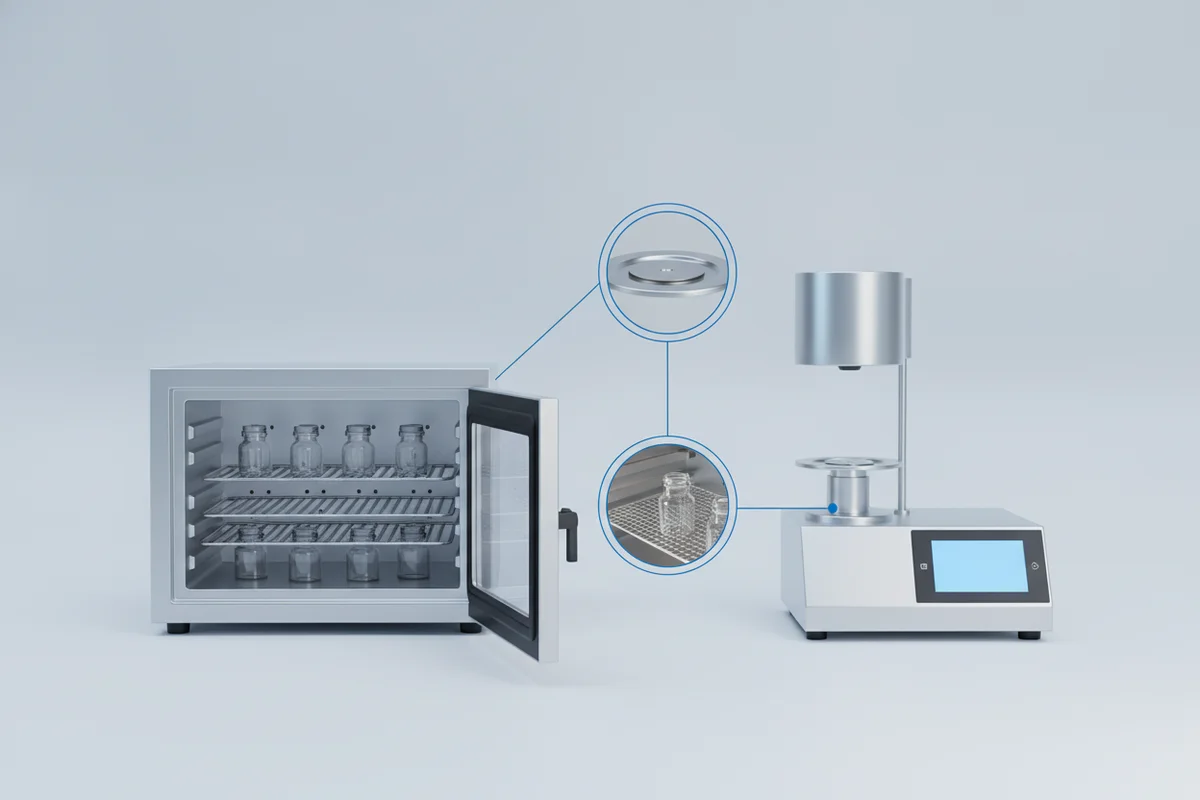
Classic drying takes place in a forced-convection drying oven. The sample is placed in a clean, dry weighing bottle or metal dish, weighed before and after drying, and the difference is converted to a percentage. The oven maintains the set temperature within the deviation specified by the manufacturer.
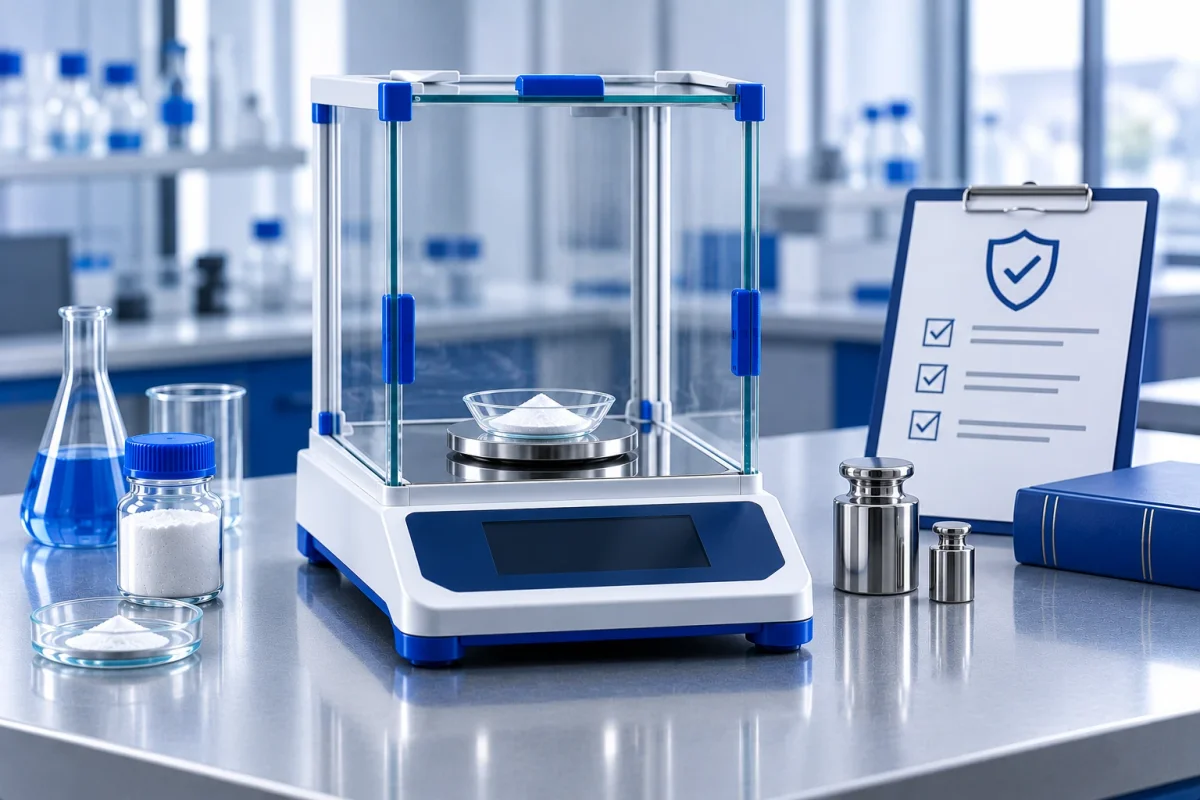
Dishes are prepared in advance: weighing bottles for drying are dried to constant mass and stored in a desiccator. Don't touch the dish with bare hands after drying—grease marks distort the mass. Weighing requires analytical balances with a readability of 0.1–0.001 g: the smaller the sample, the higher the balance requirements.
Temperature is set according to the procedure: grain often uses stepwise drying, soil uses the regime specified in the industry standard. There's no universal number, and you can't substitute a value from another industry. Sample weight and drying temperature are linked: a thin layer dries faster and at a gentler regime, a thick one requires more time.
Drying is carried out to constant mass: two consecutive weighings with an interval give a difference no greater than allowed by the procedure. It's drying to constant mass that separates a correct result from an approximate one.
The method is slow but applicable to materials that melt, sinter, or release moisture unevenly under rapid heating. Drying ovens and thermostats from Memmert and ovens from Hettich are suitable for such work.
Thermogravimetric moisture analyzer: how it works and how it differs from a drying oven
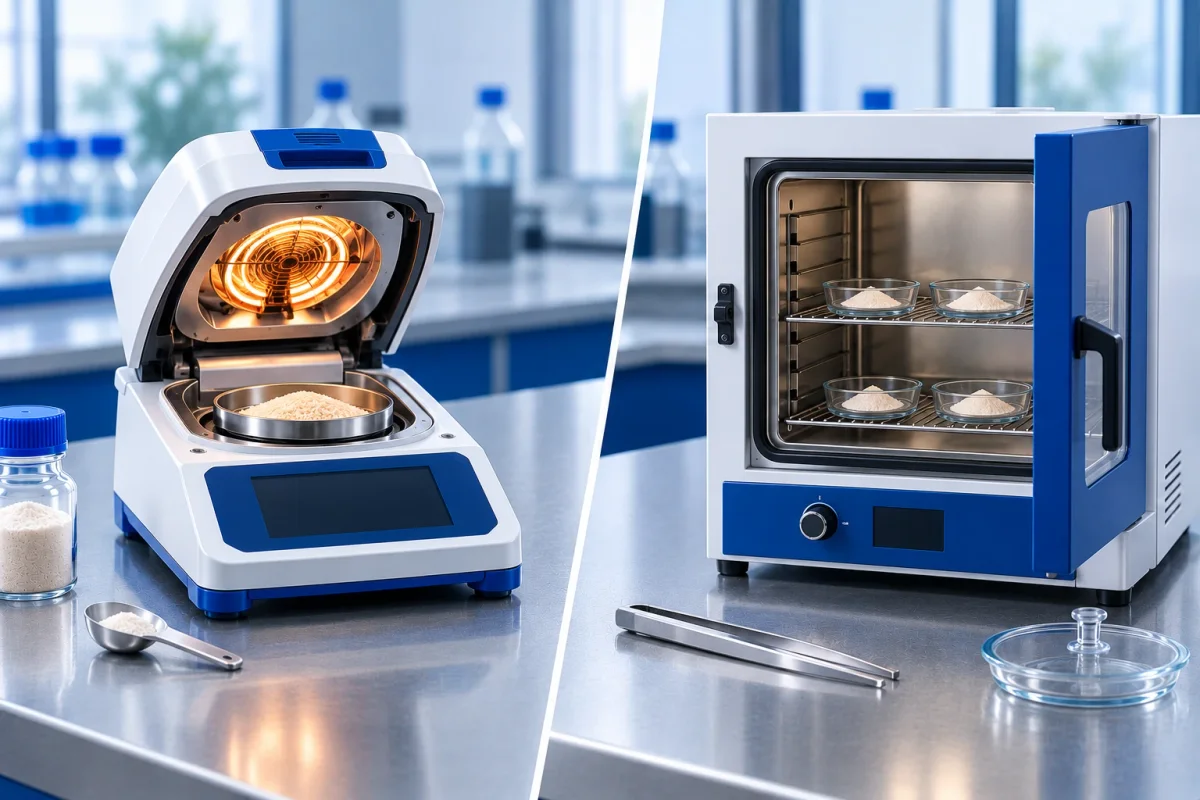
A thermogravimetric moisture analyzer combines a heater and a balance in one housing. The sample is placed on the pan, the instrument heats it with an IR emitter or halogen lamp, and continuously weighs it. Once mass loss stops, the result appears on the screen as a percentage.
The difference from an oven lies in heating geometry and feedback. Heating comes from above, a thin sample layer warms quickly, and the balance records mass changes in real time. Hence the speed: a cycle takes minutes instead of hours. Hence also the limitation: the method works poorly on materials that form a crust and don't release moisture from within.
The key parameter is the drying mode: temperature, switch-off criterion, and initial mass. Different manufacturers use similar logic, but the switch-off criterion is set separately. If the criterion is too lenient, the instrument stops early and underestimates moisture.
A moisture analyzer measures mass loss on heating, not water content as such. Volatile components other than water also evaporate and end up in the result. Samples with essential oils, alcohols, and highly volatile additives require a separate procedure.
Comparing a moisture analyzer and a drying oven on the same sample is useful when implementing the rapid method. Take a sample, measure it in the thermogravimetric analyzer, and dry it in parallel in the oven. A difference exceeding the tolerance indicates settings, not a faulty instrument.
Sample and weight preparation: homogeneity, mass, replicate measurements
Before measurement, the sample is mixed and reduced to a representative portion. Large pieces are crushed: moisture is distributed unevenly, and a piece with a dry crust will give an underestimated result. Store the sample in an airtight container, otherwise it exchanges moisture with the room air.
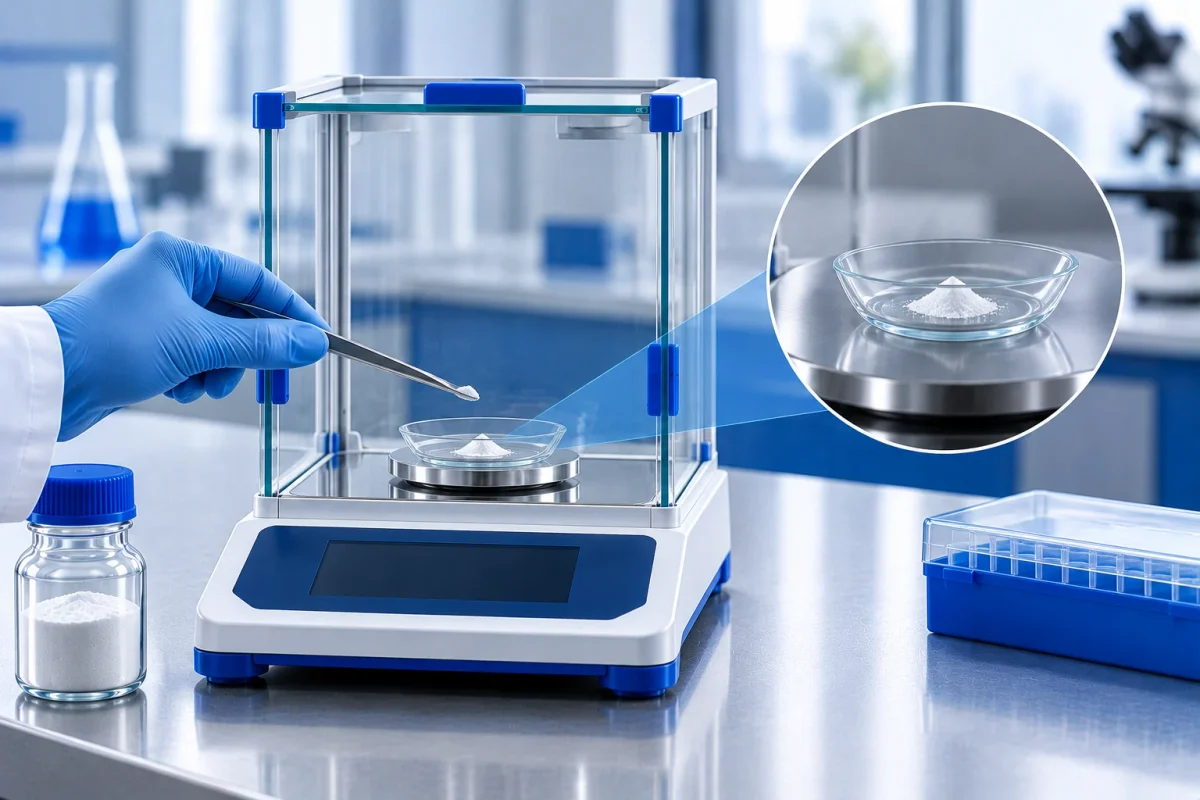
Sample preparation for a moisture analyzer includes mixing, grinding, and mass control. Sample mass is taken from the procedure. Guideline: the sample layer on the pan should be thin and uniform, and the mass sufficient for the balance to operate in its working range. A small sample dries faster but is more sensitive to heterogeneity. A large sample is more stable but lengthens the cycle.
Replication means at least two parallel measurements. Repeatability of moisture results is compared with the norm in the procedure. If the discrepancy is larger, look for the cause: heterogeneous sample, dirty pan, incorrect switch-off criterion.
For the drying oven method, there's an additional step of preparing weighing bottles. The check is simple: take an empty weighing bottle, dry it, and weigh twice with an interval. The mass should match within the balance readability.
Comparing methods: speed, accuracy, applicability to different materials
| Parameter | Moisture analyzer | Drying oven |
|---|---|---|
| Cycle duration | Minutes | Hours |
| Throughput | High | Limited by oven capacity |
| Reference to standard | Requires validation against arbitration method | Direct, if the procedure is for drying |
| Difficult materials | Crust, volatiles interfere | Robust to most samples |
| Operator workload | Minimal | Weighings and constant-mass checks |
Practical conclusion: a moisture analyzer and a drying oven serve different purposes. A moisture analyzer is needed for routine batch control and incoming inspection where speed matters. A drying oven remains the arbitration method and the basis for procedures where the result must match the normative document.
Many labs keep both instruments. The moisture analyzer provides a quick picture for each batch, the oven serves as a control point for reporting and periodic verification. This combination saves time and resolves questions at acceptance.
Common mistakes and how to check repeatability
Discrepancies between a moisture analyzer and an oven are almost always explainable. Analyze them using the scheme 'symptom → cause → what to do'
| Symptom | Cause | What to do |
|---|---|---|
| Moisture analyzer consistently underestimates | Lenient switch-off criterion, thin layer dried too fast | Tighten the criterion, check the mode |
| Results vary from sample to sample | Heterogeneous sample, large pieces | Grind and mix the sample |
| Overestimation on both methods | Volatile components or damp container | Check sample composition and storage conditions |
| Repeatability worse than norm | Uncalibrated balance or instrument | Perform calibration and verification |
Mistake: 'We'll just eyeball it, the instrument is smart anyway.' Risk: systematic bias that surfaces during arbitration. How to avoid: check the instrument against a standard sample once per shift.
Here's how to check repeatability. Take one sample, divide it into two parts, and measure both by both methods in triplicate. Compare the means and the spread. If the difference is stable, introduce a correction factor and record it in the procedure. If the spread is large, the problem is in sample preparation.
Mistake → consequence → how to avoid: weighing bottle not tightly closed after drying → weight gain from air moisture → store only in a desiccator and handle with tongs.
Rapid moisture method: when it's justified
The rapid moisture method is needed where a batch decision must be made within a shift. The warehouse can't wait four hours for the oven to finish drying a sample while the line needs raw material. A moisture analyzer shortens the cycle to 5–15 minutes and allows rejecting a batch before unloading.
The rapid method is justified in three cases. First, incoming raw material inspection when the supplier is waiting to unload. Second, adjusting the process during a shift. Third, sorting grain and seeds before storage. In all three, speed matters more than absolute accuracy, but the result must fall within the procedure's tolerance.
Don't switch arbitration disputes and GOST acceptance to the rapid method: there you need a direct reference to drying. A moisture analyzer is also unsuitable for materials with crust and high volatile content. In these cases, the rapid method will give a bias you'll have to explain to the counterparty.
A useful practice is calibrating the moisture analyzer against the oven for each new raw material batch. Build a relationship from 5–10 samples, and you'll get a correction factor for a specific supplier. Then the rapid method will produce results comparable to arbitration.
Grain and soil moisture: industry specifics
Grain and soil moisture are measured by different rules, and their regimes must not be confused. For grain, sample integrity is critical: ground and whole samples give different results. Wheat and barley use stepwise drying, corn has its own regimes. Grain moisture analyzers are often built into the acceptance flow to screen batches with moisture above safe storage levels.
For soil, moisture is tied to sample preparation: an air-dry sample is brought to the state specified in the procedure before measurement. A mistake is drying soil at too high a temperature: organic matter partially decomposes and the result is overestimated. For soils and grounds, the regime is taken from the industry standard, not from the manual of a universal moisture analyzer.
The general rule for both cases: record not only the percentage but also how the sample was prepared. A month later, a dispute about grain or soil moisture will be settled by the preparation record, not the number itself.
Incoming raw material inspection: moisture as an acceptance condition
Incoming raw material inspection turns moisture into a contract condition. If the specification states 'moisture not more than 14%', the lab must deliver a result within a timeframe that suits both the warehouse and the supplier. A combination helps here: rapid measurement with a moisture analyzer at unloading and control drying for disputed batches.
Acceptance procedure:
- take a composite sample according to the scheme specified in the contract;
- reduce the sample to a representative portion and mix;
- perform a rapid measurement with the moisture analyzer, record the mode;
- for a borderline result (within 0.5% of the norm), send the sample for control drying;
- record the result, mode, and method in the acceptance report.
Borderline batches are the main source of disputes. If the moisture analyzer shows 13.8% against a norm of 14%, the batch formally passes, but the method's error could push it over the limit. For such cases, agree in advance which method is considered arbitration. Usually it's the drying oven method.
Another practice is to store control samples of disputed batches in airtight containers until the end of the month. If the supplier contests the result, you can repeat the measurement on the same sample and demonstrate repeatability.
Laboratory equipment for moisture: what should be in the kit
Laboratory equipment for moisture is not a single instrument but a set where each element affects the result. Assemble it for your method: drying requires an oven, balances, weighing bottles, and a desiccator; the rapid method requires a moisture analyzer and balances for control weighings.
| Kit element | Purpose | What to look for |
|---|---|---|
| Drying oven | Arbitration drying | Temperature uniformity, chamber volume |
| Moisture analyzer | Rapid control | Balance readability, switch-off criterion |
| Analytical balances | Weighing sample and weighing bottles | Readability 0.001 g, verification |
| Weighing bottles and desiccator | Drying and storing dishes | Material, airtightness, presence of silica gel |
Choose dishes for the sample volume: too small a weighing bottle won't allow a thin layer, too wide will complicate weighing. For volumetric operations, if your procedure includes them, Class A and B volumetric glassware will come in handy. For contamination-sensitive samples, choose borosilicate glass 3.3 dishes.
Don't forget tongs, a scoop, and a spatula—the little things that keep you from warming the sample with your hands and sending your results drifting. Put the kit together once and store it separately from other work so you're not hunting for weighing tins on inspection day.
How to Choose a Moisture Analyzer and Drying Oven for Your Lab
Start by determining what you're measuring and how many samples you run per day. For a stream of similar samples, a moisture analyzer with stored methods and a clear stop criterion will do the job. For varied materials and GOST-compliant reporting, you need a drying oven with precise temperature control.
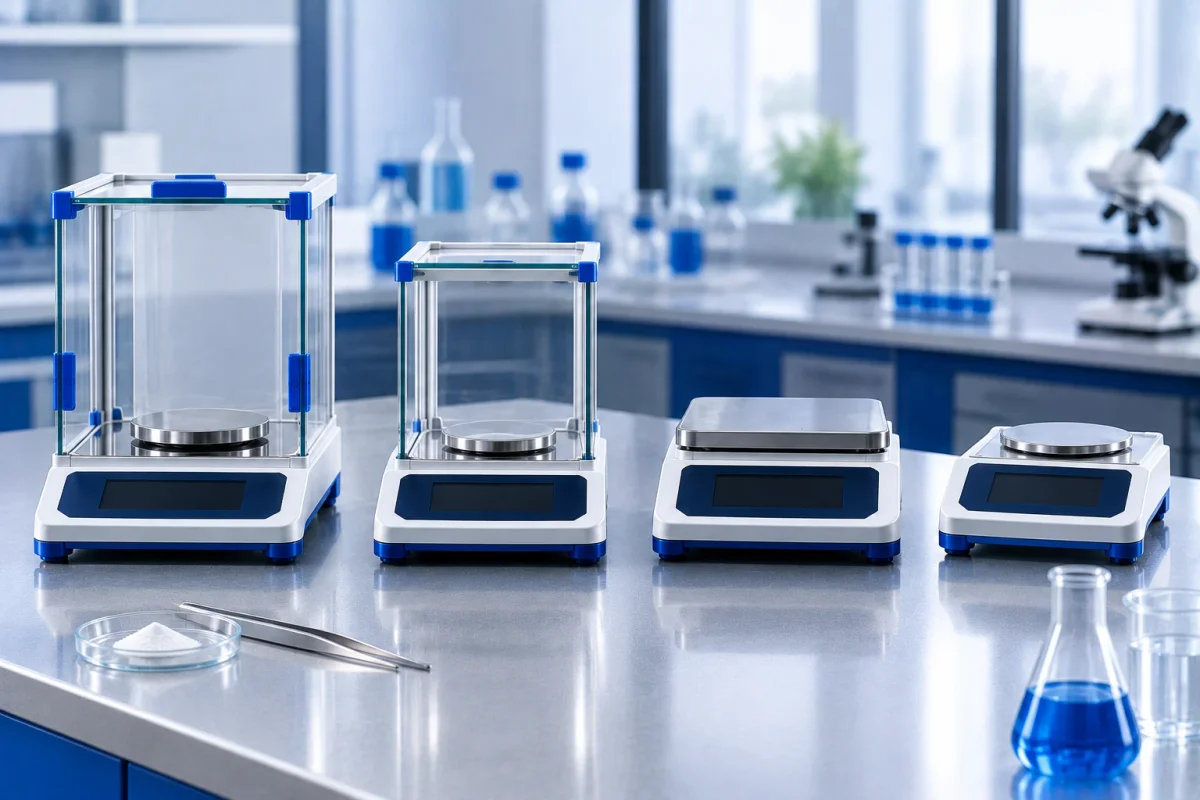
When choosing a moisture analyzer, look at the balance resolution, temperature range, heating element type, and whether you can set a stop criterion. For a drying oven, what matters is temperature uniformity throughout the chamber, chamber volume, and convection type. Analytical balances are selected based on sample weight and the required accuracy.
The second criterion is service. Plan calibration and verification in advance: without them, a moisture analyzer's result carries no legal weight in a dispute. Confirm the calibration interval with the manufacturer and build it into your schedule. Increase the frequency if the instrument runs intensively or sits in a room with temperature swings.
If you're unsure what to choose, send us a list of your samples and methods—we'll match you with a moisture analyzer, balance, and drying oven. Just submit a request via contacts, specifying the material, sample volume, and the required standard.
How to Write a Test Report: What to Record Beyond Percentages
A moisture figure means nothing without the measurement conditions. A month later, nobody will remember the drying temperature, how long the sample sat in the desiccator, or what sample weight was used. The report must let another employee repeat the experiment and get the same result within tolerance.
The minimum set of fields worth locking into your lab's template:
- sample identification: batch number, date and location of sampling, mass of the composite sample;
- method and reference to the procedure: GOST, ISO, or the company's internal standard with its number;
- conditions: drying temperature to within 1 °C, time, type of weighing tin, desiccator used;
- balance: model, resolution (0.001 g or 0.01 g), date of last verification;
- replicates: mass of each sample and the result for each, not just the average;
- difference between replicates and a conclusion on whether the result is acceptable;
- analyst, date, signature, and, if required, the lab's accreditation certificate.
For a moisture analyzer, add the instrument model, heating mode (stepwise or rapid), stop criterion (e.g., weight loss below 1 mg in 30 s), and the number of the stored method. Without this, a dispute with a raw material supplier over a 0.4% discrepancy will get you nowhere.
Check your current form against three points. Open a report from a month ago: can you tell which balance was used? Is the temperature specified to the degree? Are the results for each replicate there? If the answer to even one question is "no," the template needs work.
What It Costs to Set Up Moisture Measurement In-House
The budget has three parts: the instrument, the supporting equipment, and the ongoing cost per cycle. It's easiest to calculate with a concrete example: a lab receives 20 grain samples per day and operates 22 days a month.
A forced-convection drying oven of 50–70 L costs roughly 600–1500 USD, depending on the brand and the accuracy of the temperature controller. A balance with 0.001 g resolution and verification runs 300–800 USD. A desiccator with silica gel, drying tins, tongs, and a scoop add another 80–150 USD. All told, a starter drying setup comes to about 1000–2500 USD.
A moisture analyzer with a halogen heater for a stream of samples costs more: 1500–4000 USD for an instrument with stored methods and a stop criterion. But one cycle takes 5–15 minutes instead of 2–4 hours.
Calculate ongoing costs like this: electricity = instrument power × operating time × rate. An oven drawing 1.2 kW for 6 hours a day at 0.05 USD per kWh comes to about 4 USD a month. A moisture analyzer at 0.4 kW for an hour a day runs about 0.9 USD. The energy difference is small; the moisture analyzer's real advantage is staff time. An hour of a lab technician's time spent loading and unloading tins and weighing usually costs more than the electricity.
A separate line item is balance verification (once a year) and lab accreditation, if the result is needed for a certificate or a dispute with a counterparty. These costs don't depend on the method and should be budgeted in advance.
Determining Sample Moisture with a Moisture Analyzer: Step by Step
Determining sample moisture with a moisture analyzer starts with selecting the stored method for your material. Don't run the instrument on whatever setting it happens to be on: a 0.5% bias is hard to explain later.
The procedure:
- turn on the moisture analyzer and let the balance warm up as instructed;
- check the zero point with an empty pan;
- weigh out the sample per the method and spread it in a thin layer;
- run the method with the required temperature and stop criterion;
- wait for the end signal and record the result;
- repeat the measurement on a second sample and compare repeatability.
A do-it-yourself check: after the cycle, the pan should be dry with no scorched spots. If a damp crust remains on the bottom, the setting is too gentle or the sample layer is too thick. If there's a burnt smell, the temperature is too high for this material.
Frequently Asked Questions
Which moisture method should I choose: a moisture analyzer or a drying oven?
For routine batch control, go with a moisture analyzer: the cycle takes minutes. If the method specifies drying or the result goes into a report, the reference method is the drying oven. Many labs use both instruments and cross-check the readings.
What sample weight and drying temperature should I use for my sample?
Take the values from the method for your material, an industry standard, or the instrument manufacturer's recommendations. There's no universal "weight and temperature" pair: grain, soil, and polymers each require different settings. If no method exists, the setting is developed experimentally and validated against the reference method.
Why do moisture analyzer and drying oven results differ?
The main reasons are a different drying end criterion, a non-uniform sample, and volatile components that the moisture analyzer counts as moisture. Check sample preparation and the stop settings, then compare the instruments on a reference sample.
Can I use a regular lab balance instead of a moisture analyzer?
Only together with a drying oven: the balance gives you the mass before and after drying but doesn't control the heating. A balance alone won't tell you the moisture content.
How often should a moisture analyzer and drying oven be calibrated?
The interval is set by the manufacturer and your quality system; for intensive use it's shortened. In addition, check the instrument against a reference sample whenever the method changes and after repairs.
Choose the method to fit the task: a moisture analyzer for speed, a drying oven for reporting, and both together for reliable control. LPS UZ supplies lab balances, moisture analyzers, drying ovens, and glassware, and helps with method-specific selection and arranging calibration.