
 Labware
Class A vs Class B Volumetric Glassware: What's the Difference and When Do You Need Each

Class A and Class B volumetric glassware differ in their allowable tolerance, and this difference directly affects analytical results. Many buyers opt for cheaper items "just in case," only to find that the lab's recalculated concentrations don't match the certified method. Others overpay for Class A where it has no impact whatsoever.
Let's break down where the accuracy class comes from, how the tolerances differ, how to read the markings and verification documents. You'll get a practical guide: which volumetric glassware to buy for quantitative analysis and which is acceptable for auxiliary operations.
What Is the Accuracy Class of Volumetric Glassware and Where Does It Come From
The accuracy class indicates how much the actual capacity of a vessel can deviate from its nominal volume. In Uzbekistan and CIS countries, volumetric glassware is governed by GOST 1770; for volumetric flasks and cylinders, international standards ISO 1042 and ISO 4788 also apply. These specify the allowable tolerance limits for each nominal volume.
Glassware is calibrated at a specific temperature, usually 20 °C. The glass bears the nominal volume, calibration temperature, and class. The manufacturer either marks this data based on inspection results or supplies a certificate confirming the batch characteristics. Factory calibration of volumetric glassware is done with water, accounting for density at that temperature.
The class is assigned based on capacity measurement results. The tighter the tolerance, the higher the production requirements: neck geometry, annealing quality, wall consistency. That's why Class A typically costs more, and the vessel itself requires careful handling.
- GOST 1770 sets tolerances for flasks, cylinders, beakers, test tubes, and pipettes.
- ISO 1042 and ISO 4788 apply to volumetric flasks and cylinders in international practice.
- OIML recommendations describe general approaches to assessing laboratory glassware accuracy.
Class A: Tolerances, Purpose, and Where It's Mandatory
Class A is glassware with the smallest allowable capacity deviation. It's used where volume error distorts the final result: preparing standard solutions, titration, quantitative analysis per certified methods.
If a method or regulatory document explicitly requires Class A glassware, substituting Class B makes the result formally invalid. An auditor may flag the non-conformance even if the numbers happen to match. This is especially important for labs working under accredited methods and issuing reports.
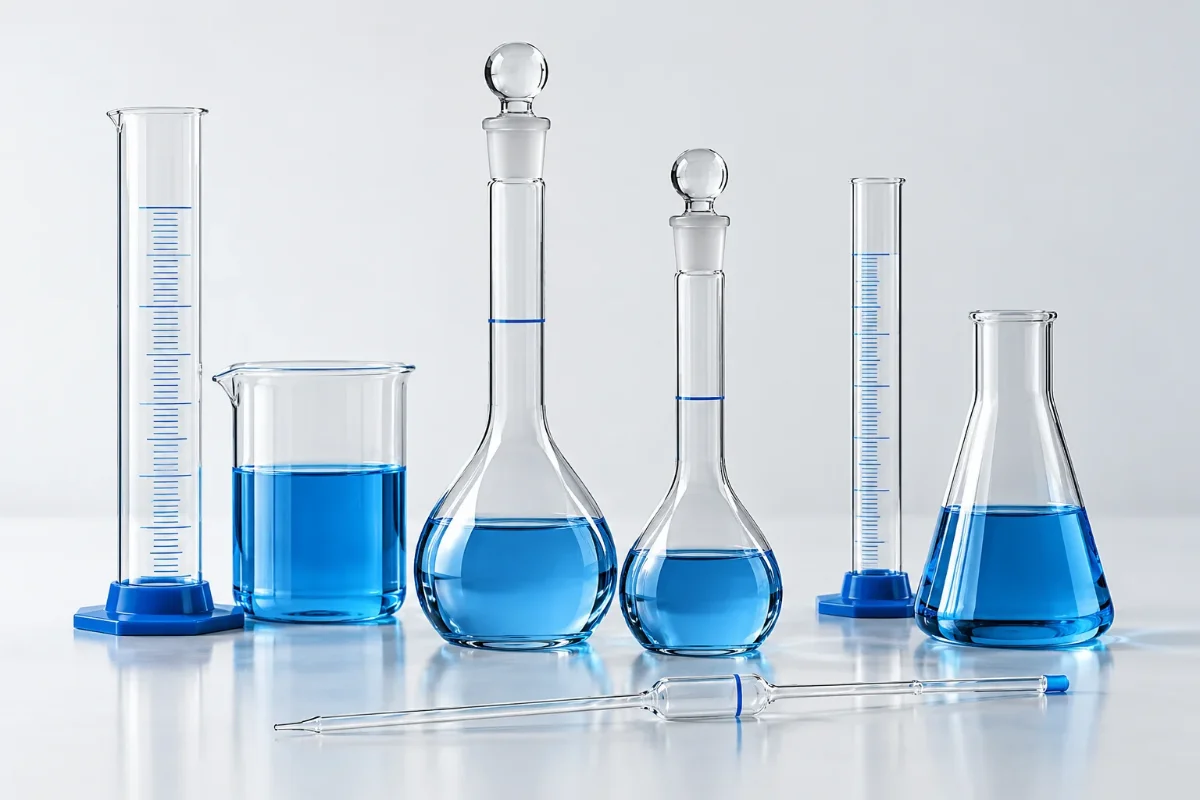
Class A is more often chosen for small-volume volumetric flasks, burettes, and pipettes used to measure precise aliquots. For example, a 100 mL volumetric flask of Class A is a standard tool for preparing solutions of a given concentration. Here the accuracy class is no formality: volume deviation translates directly into concentration. For auxiliary operations, that precision is excessive and drives up costs.
Rule of thumb: if the volume feeds into a concentration or analytical result calculation, go with Class A. If the volume is for dissolving, rinsing, or rough sampling, the requirements are lower.
Class B: How It Differs in Tolerances and When It's Sufficient
Class B allows a larger deviation from nominal. Such glassware is used in preparatory operations where a small volume discrepancy doesn't affect the conclusion: sample dilution before filtration, reagent transfer, approximate measurements.
Whether Class B is acceptable is determined by the method. Some documents explicitly state permissible classes; others specify only Class A. You can't promise that Class B is "always sufficient" for standard solutions: it depends on the specific method text and the lab's internal procedures.
Class B is cost-effective for high-volume auxiliary work. A Class B graduated cylinder is handy on the bench for quick sampling, while precise aliquots are taken with a Class A pipette. This separation reduces wear on expensive glassware.
| Parameter | Class A | Class B |
|---|---|---|
| Allowable tolerance | Minimal | Larger than A |
| Typical use | Quantitative analysis, standard solutions | Auxiliary operations |
| Cost | Higher | Lower |
| Handling requirements | Careful, regular checks | Standard |
Marking of Volumetric Glassware: How to Read Inscriptions, Nominal Volume, and Calibration Temperature
Laboratory glassware bears several key markings. The nominal volume is given in milliliters, with the calibration temperature next to it, usually 20 °C. The accuracy class may be indicated by a number or letter depending on the standard and manufacturer.
Class 2 glassware per GOST is marked differently from Class A: don't confuse the designations during receiving. If a vessel has no class, only a volume, it's a product without confirmed metrological characteristics. Don't use such items for analytical work.
Check the integrity of the markings: a worn class or temperature digit is grounds to request the batch certificate. Manufacturer documents matter more than neat engraving: they are what confirms characteristics during incoming inspection. The marking must match the certificate word for word, including the nominal volume.
Class A and Class B Volumetric Glassware: Where Accuracy Class Is Critical
Class A accuracy is critical where volume directly enters the calculation. When preparing a standard solution, flask capacity error carries over into concentration and then into the measurement result. In titration, titrant volume directly affects the determined content.
In quantitative analysis per a certified method, the glassware class is usually specified. If the document requires Class A, a deviation is recorded as non-conformance. For semi-quantitative and qualitative samples, a broader choice is allowed, but the method owner makes the call.
Titration imposes specific requirements on burettes and pipettes: smooth drainage and calibration stability matter. Cheap glassware with uneven drainage produces scatter from replicate to replicate. Saving on a burette costs you extra repeat analyses.
For reference solutions and calibration mixtures, use Class A: errors here multiply across the entire measurement series. For rinse solutions and glassware preparation, Class B is sufficient.
How to Inspect Glassware on Receipt and What to Do About Verification
Incoming inspection starts with documents: the certificate or passport must confirm the class and nominal volume. Compare the marking on the vessel with the batch document. Any discrepancy is grounds for a claim to the supplier before the glassware goes into service.
Inspect the glass for chips and cracks, check the neck for cleanliness and the graduations for integrity. Volumetric glassware with a damaged scale is taken out of service: you can't restore calibration by eye. Keep a log recording receipt, inspection results, and disposal.
Verification of volumetric glassware depends on the lab's status and method requirements. For accredited labs and official measurements, confirmation of characteristics is documented per established procedure. Check the frequency and list of items in your quality management system: there's no universal "once a year for all glassware" rule.
Practical rule: the higher the class and the more intensive the use, the more frequent the internal capacity checks and the more attention you should pay to verification deadlines.
Set up a simple receiving checklist: documents → marking → glass inspection → log entry. It resolves most disputes with suppliers.
Common Mistakes: Using Class B Where A Is Needed, and Vice Versa
Accuracy class mistakes are costly: some ruin analytical results, others inflate the procurement budget with no benefit. Below are common situations from purchasing practice.
| Mistake | Consequence | How to Avoid |
|---|---|---|
| "Let's take Class B, the difference is small" | Non-conformance with method, repeat analyses | Check method requirements before purchasing |
| Class A for rinsing and dissolving | Unnecessary expense, faster wear | Separate glassware by operation |
| No batch certificate | Class unconfirmed during inspection | Require documents with delivery |
| Glassware without tracking log | Unclear what was disposed and when | Keep a receipt and disposal log |
Another mistake is buying volumetric glassware without a volume reserve. One flask for the whole department creates a queue and forces rushed washing. Plan a set for typical operations so analysis isn't held up. General requirements for laboratory glassware are summarized in the relevant Wikipedia article.
How to Select and Order Volumetric Glassware in Tashkent
Selection starts with a list of operations and method requirements. Write down which volumes you need, where Class A is required, and where Class B suffices. Then determine the glassware type: flasks, cylinders, pipettes, burettes.
Calculate demand based on the number of parallel analyses and the washing cycle. If you run ten setups of three replicates a day, one flask isn't enough: you need a set with reserve. Include auxiliary glassware so the precise items aren't stuck in the wash.
The catalog of laboratory glassware and volumetric accessories features items of various classes and volumes. To order in Tashkent and across Uzbekistan, send a list with volumes, class, and glassware type via contacts for selection and a commercial proposal: our specialists will help match items to your needs.
When ordering, confirm the documentation package for the batch. For an accredited lab, this saves time on incoming inspection. For production sites, consistent supply of consumables matters.
Frequently Asked Questions
How does Class A differ from Class B in allowable tolerance?
Class A has a smaller allowable capacity deviation from nominal; Class B has a larger one. Specific values depend on the nominal volume and the standard the glassware was made to. Check the figures against the current edition of GOST or ISO for your item.
For which analyses must Class A glassware be used?
For quantitative analysis per certified methods, preparation of standard solutions, and titration, if explicitly required by the document. The decision is based on the method text, not a general rule.
Can Class B glassware be used for preparing standard solutions?
Only if the method or the lab's internal procedure allows it. Without such a provision, use Class A: otherwise the result is formally invalid, even if the numbers match.
How to identify the accuracy class from the marking on the glassware?
The glass bears the nominal volume, calibration temperature, and class designation. Different manufacturers and standards use different designations, so compare the marking with the batch certificate. Glassware without a class isn't suitable for precise work.
What matters more for accuracy — glassware class or technician skill?
Both factors work together: the class sets the limit of instrumental error, while skill determines whether that limit is achieved. Class A glassware in the hands of an inexperienced technician won't yield accurate results without proper sampling technique and temperature control.
Temperature and Drainage Correction: Why the Same Volume Gives Different Results
Glassware is calibrated at 20 °C. If the solution is hotter or colder, the actual volume in the vessel doesn't match nominal, and Class A won't save you: temperature error overrides the capacity tolerance. For water, expansion is about 0.02% per 1 °C; for organic solvents the coefficient is higher: acetone and ethanol expand more noticeably. Bring the solution to room temperature before adjusting to the mark.
The second source of discrepancy is drainage. For Class A graduated pipettes, hold 5–15 seconds at the tip so the glass film can drain; don't blow out the residual drop. For burettes, fill the tip before starting, otherwise the first delivery is low. When checking with water, use distilled water of known density at that temperature and weigh on a balance with a readability of at least 1 mg for volumes up to 50 mL.
| Operation | What to Do | Standard |
|---|---|---|
| Adjusting to the mark | Room-temperature solution, eye level with the meniscus | Meniscus touches the mark, no drop above |
| Draining from a pipette | Hold vertically, wait for drainage down the wall | 5–15 s, don't blow out the residual |
| Water check | Weigh the dispensed water on a verified balance | Deviation within the certificate tolerance |
| Working with solvent | Allow to cool to 20 °C | Solution temperature matches calibration |
The Cost of a Class Error: Calculation on a Standard Solution
The price difference between a Class A and Class B flask of the same volume is usually small: for 100–250 mL it rarely exceeds 15–30% of the vessel cost. Against the backdrop of a repeat analysis and a rejected batch, that's minor. Count the cost of the error, not the cost of the flask.
Example. A standard solution of 1.000 g/L is prepared: a 1.000 g sample is transferred to a 1 L volumetric flask. If the Class B flask tolerance for this volume is twice as wide as Class A, the concentration shifts by roughly the same proportion. With a Class A tolerance of about ±0.4 mL per 1 L, the concentration deviation is about 0.04%; with double the tolerance, about 0.08%. For a single analysis, that's negligible. But if a method is calibrated against this standard and 200 determinations are run per month, the systematic error repeats in every one.
Quick formula to sanity-check: relative volumetric error = flask tolerance (mL) ÷ nominal volume (mL) × 100 %. Plug in the tolerance from the certificate that came with your glassware and compare it against what the method requires. If the method sets a 0.1 % limit and your calculation gives 0.15 %, a Class B flask won't cut it for that step.
Where you can cut costs: beakers and graduated cylinders used for auxiliary operations, and containers for storing prepared reagents. Where you can't: the volumetric flasks and pipettes that sit in the standard-preparation and titration chain. It's cheaper to buy one Class A vessel than to rerun a whole batch of analyses.
A note on buying in bulk: ask for a certificate for each nominal volume, not one document covering the entire shipment. It's normal for a lot to have different tolerances for 50 mL and 1000 mL, but it's easy to mix up the paperwork. Attach a "nominal volume → class → tolerance → quantity" table to your order — that way the warehouse and QC inspector can verify the delivery without any arguments.
Conclusion
Match the accuracy class to the job: Class A for quantitative analysis and standard solutions, Class B for auxiliary operations where the method allows it. Check the markings and paperwork on receipt, and keep records of your glassware. LPS UZ supplies volumetric and general lab glassware, reagents, and consumables to laboratories in Tashkent and across Uzbekistan: send us your list of items and our specialists will prepare a quote, helping you choose by volume, class, and type of glassware.