 Labware
Choosing Laboratory Glassware: Glass or Plastic

Choosing laboratory glassware? The short answer: for heating, precise measurements, and work with aggressive media, go with glass; for storage, dispensing, and single-use operations with non-aggressive liquids, choose plastic. Below we'll break down the factors to consider for your specific protocol.
A common purchasing mistake: buying all glassware in one material to "simplify inventory." The result is that volumetric operations suffer in accuracy, and where plastic is needed, glass breaks and drives up replacement costs. Glassware should be selected to match the task.
This article provides selection criteria, a comparison table, a purchasing checklist, and an analysis of typical mistakes.
Choosing Laboratory Glassware: What Matters More – Chemical Resistance, Accuracy, or Cost?
The priority depends on what you do most often with the glassware. If it's titration, preparing standard solutions, or boiling, then chemical and thermal resistance come first. If it's sample transfer, freezer storage, or single-use operations, then cost per unit and safety upon breakage are more important.
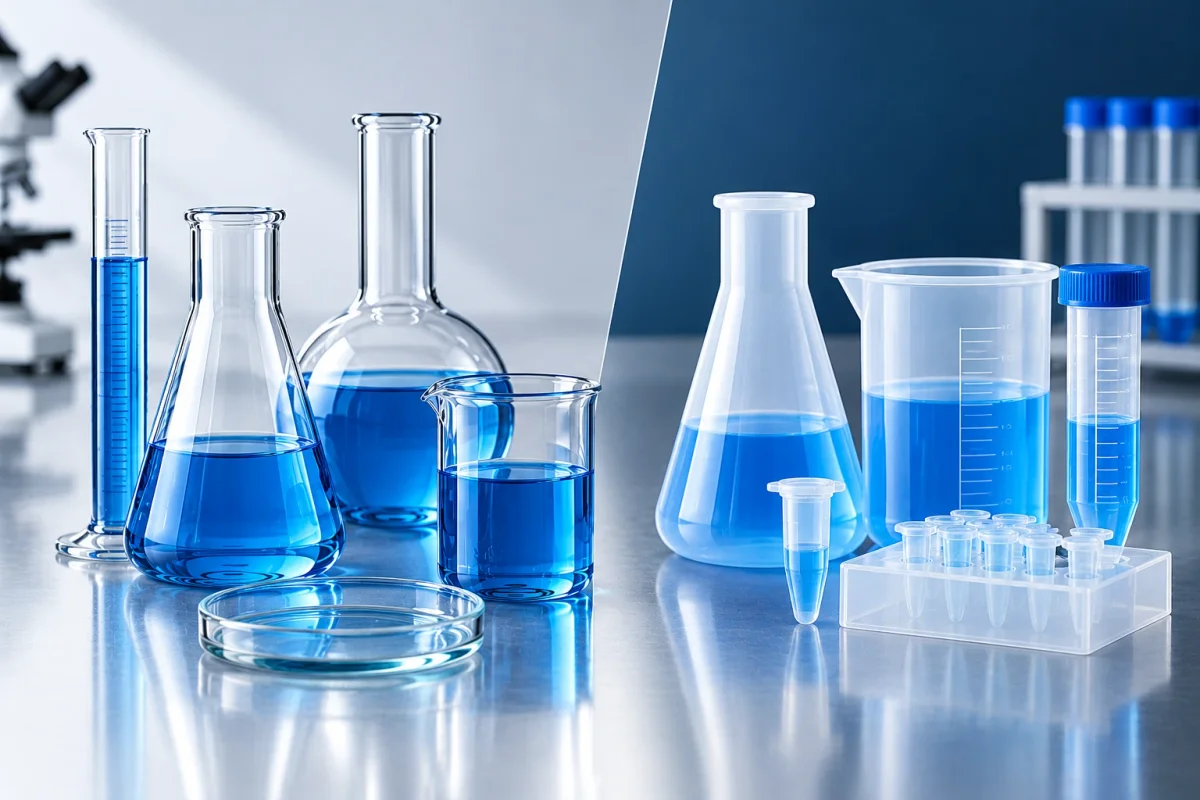
Glass laboratory glassware costs more per unit but lasts for years with careful handling and does not react with most reagents. Plastic is cheaper, lighter, and unbreakable, but has limitations regarding temperature and solvent compatibility.
Compare the basic criteria to see the difference:
| Criterion | Glass | Plastic |
|---|---|---|
| Heating to high temperatures | Yes, depending on the grade | Limited, usually no |
| Volume measurement accuracy | High | Lower, depends on class |
| Resistance to organic solvents | High | Depends on material |
| Impact resistance | Low | High |
| Cost per unit | Higher | Lower |
If in doubt, start by separating operations: use glass for measurement and heating tasks, and plastic for auxiliary and transport tasks. If you're searching for "lab glassware to buy" for the first time, start with a basic set and expand as needs arise. For a full list of categories, see general laboratory equipment.
Borosilicate Glassware: Where It's Indispensable
Borosilicate glass is the primary material for glassware that contacts heat and aggressive media. It withstands temperature fluctuations, is transparent, and cleans well. It is used to make flasks, beakers, test tubes, condensers, and volumetric items.
Glass is indispensable in the following cases:
- boiling and evaporating solutions on a hotplate or flask heater;
- titration and preparation of solutions of precise concentration (glassware for heating solutions must be glass);
- working with concentrated acids and alkalis;
- storing reagents that dissolve plastic;
- operations where visibility of contents is needed.
Thin glass requires care: do not place a hot flask on a cold surface, and do not wash it immediately after heating. These simple rules extend the service life of the glassware.
One supplier of such glassware and consumables is IKA Werke.
Plastic Ware: When It Wins on Safety and Consumables
Plastic laboratory ware is convenient where glass is inconvenient or dangerous: when working with infectious material, in field conditions, or when shipping samples. It is lighter, unbreakable, and cheaper, and disposable options save time on washing and sterilization.
Main materials and their purposes:
- polypropylene (PP) – transparent or translucent, autoclavable, suitable for most aqueous solutions;
- polystyrene (PS) – transparent, heat-sensitive, used for disposable tubes and plates;
- PTFE – chemically resistant, expensive, used for stoppers and seals in aggressive environments.
Plastic must not be heated above the manufacturer's specified temperatures or left under direct sunlight. Before purchasing, check compatibility with your solvents using a chemical resistance chart.
Volumetric Glassware: Accuracy Classes and Why Material Matters for Volumes
Volume measurement accuracy depends on the glassware class and material. Class A glass laboratory glassware provides the lowest error but costs more. Plastic volumetric ware usually corresponds to Class B and is suitable for auxiliary operations where high accuracy is not critical.
What to consider when choosing volumetric ware:
- Determine the tolerance for your method – this determines the class.
- Choose the type: flasks, cylinders, pipettes, burettes.
- Check whether the glassware can be calibrated in your laboratory.
- Keep in mind that plastic may change volume with temperature fluctuations.
For more on the difference between classes, see the article on Class A and B volumetric glassware. For titration and preparation of standards, use glass; for sampling and storage, use plastic if the method permits.
Working with Heating, Cooling, and Aggressive Reagents: Limitations of Each Material
Heating is the most common source of problems with plastic. Polypropylene usually withstands autoclaving under standard conditions but is not designed for open flame or contact with a hot plate. Polystyrene deforms easily even at low temperatures.
With aggressive reagents, the situation is reversed: glass is inert to most acids and alkalis, but hydrofluoric acid attacks even glass. Plastic may swell, crack, or release impurities. Storing reagents in plastic ware is permissible only with confirmed material compatibility.
Cooling is safe for both materials if sharp temperature changes are avoided. Do not place hot plastic ware in the freezer and do not pour boiling water into thin-walled plastic.
| Task | Recommended material | Limitation |
|---|---|---|
| Boiling solution | Borosilicate glass | Avoid rapid cooling |
| Storing acid | Glass or PTFE | Check resistance |
| Transferring sample | Polypropylene | No heating |
| Titration | Class A glass | Calibration required |
Compatibility with Autoclaving, Washing, and Sterilization
Glass and some plastics withstand autoclaving of laboratory glassware. Polypropylene can usually be autoclaved if confirmed by the manufacturer; polystyrene cannot. Glass handles autoclaving without restrictions but requires care during drying and transfer.
Dishwasher washing is not suitable for all glassware. Glass can be washed at high temperatures; some plastics deform. Check the markings on the item and the manufacturer's recommendations.
A dry heat oven is only for glass and metal. Plastic melts in a dry heat oven. If you need sterilization of plastic laboratory glassware, use an autoclave or ready-to-use sterile disposable items.
Before purchasing, confirm with the supplier which sterilization regimes a specific item can withstand. For a checklist on glass items, refer to the laboratory equipment section.
How to Compile a Glassware List for Your Laboratory's Needs
Start by inventorying your methods. List all operations where glassware is used: sample preparation, volume measurement, heating, storage, transportation. Next to each, indicate the required material and accuracy class.
Then group items by type and volume. This makes it easier to see where plastic can be used and where glass is necessary. Don't forget spares: glass breakage and plastic wear are normal, so budget for replacements.
Check which items the chosen manufacturer supplies and whether they are compatible with your equipment. For selection by material type, volume, and accuracy class, contact glassware selection consultation.
For current terms and availability, check with the supplier: prices and lead times depend on the batch and warehouse. Laboratory glassware in Tashkent offers a wide selection from local suppliers, and stock availability often determines delivery times. Budget guideline: a Class A volumetric flask costs 3-5 times more than a plastic analog, so calculate the glass reserve separately from consumable plastic.
What to Bring to Batch Acceptance
Glassware is accepted not by the number of boxes but by its actual suitability for work. Inspection takes 10–15 minutes per batch and eliminates most disputes with the supplier.
- Check integrity. Pick up each glass item, inspect the neck, bottom, and joints. A crack or chip is grounds for replacement under warranty.
- Verify markings. Volumetric glassware must have the nominal volume, accuracy class, and calibration temperature (usually 20 °C). No markings — you cannot use it for volume measurement.
- Confirm the material. For borosilicate glass, look for the designation 3.3 or equivalent from the manufacturer. For plastic, check the polymer type and maximum temperature.
- Check documents. Request a certificate or batch passport. For Class A volumetric glassware, a calibration certificate is useful.
- Perform a control measurement. Fill with water to the mark and compare the volume on a scale: a deviation within the stated tolerance is normal.
The result of proper acceptance: no breakage or chips, legible markings, batch documents in hand, one or two items selectively verified for volume. If the batch is large, sampling 5–10% of packages provides a sufficient picture.
If you purchase glassware regularly, agree on who accepts the batch and where to report issues. One responsible person and a short inspection report resolve the matter faster than retrospective correspondence.
Selection Checklist and Common Purchasing Mistakes
Before placing an order, go through the list:
- check temperature and chemical compatibility for each item;
- determine the accuracy class of volumetric glassware;
- confirm whether it can be autoclaved and washed in a machine;
- budget for breakage and wear;
- verify volumes and neck sizes against existing equipment.
Common mistakes:
| Mistake | Consequence | How to avoid |
|---|---|---|
| "Make it look nice" – all plastic glassware | Inaccurate measurements, damage during heating | Use glass for volumetric and heating operations |
| Glass where plastic is needed | Breakage, injuries, downtime | Use disposable plastic for samples |
| Ignoring accuracy class | Repeated analyses | Verify tolerances per method |
| Purchasing without spares | Work stoppage due to breakage | Keep 10–20% stock of high-use items |
How to Track Glassware and Avoid Losing It
Loss of glassware in the lab is rarely due to major accidents. Most often, flasks and beakers simply migrate between workstations, leave with samples to other departments, or are written off as breakage without a record. Six months later, you find that only four 250 mL volumetric flasks remain instead of ten, and you need to purchase again.
A simple way to keep track is an inventory log in a spreadsheet. Create a file or paper ledger and record every movement: who took it, where, and when it was returned. It's useful to keep separate lines for glass and plastic — they have different service lives and different reasons for write-off.
| Category | What to record | How often to reconcile |
|---|---|---|
| Class A volumetric glassware | Number, nominal volume, calibration date | Quarterly |
| General-purpose glassware | Quantity on hand | Monthly |
| Disposable plastic | Remaining packages | With each issue |
| Write-off due to breakage | Reason, who recorded it | Immediately upon occurrence |
Two habits save noticeable amounts. First: mark or engrave glassware assigned to a specific workstation. Second: keep a minimum safety stock of items that break most often (flasks, beakers, pipettes), usually 10–15% of the working quantity. This way you don't stop an analysis due to a broken flask and don't over-purchase.
Consider service life. Glass, with careful handling, lasts for years, but cracks and chips on the neck can render it unusable. Plastic wears out faster: cloudiness, scratches on walls, volume change after autoclaving — grounds to replace the container even if it is intact.
Frequently Asked Questions
Which glassware material to choose for heating and boiling solutions?
Borosilicate glass is suitable for heating and boiling. It withstands high temperatures and fluctuations and is inert to most solutions. Use plastic only under conditions approved by the manufacturer.
Can aggressive reagents be stored in plastic ware?
Only if the material is confirmed compatible with the specific reagent. For concentrated acids and alkalis, glass or PTFE is more reliable. Check the chemical resistance chart before use.
How does glass measuring ware differ from plastic in terms of accuracy?
Class A glassware has a smaller margin of error and holds its volume better. Plastic usually falls into Class B and is fine for auxiliary work. For titrations and standards, go with glass.
Which labware can't be autoclaved, and why?
Polystyrene and thin-walled plastic without markings can't be autoclaved — they warp. Glass handles the autoclave with no restrictions. Always check the manufacturer's recommendations.
What should you buy first when setting up a new lab?
Start with the basics: volumetric flasks and cylinders, beakers, test tubes, and flasks for heating. Then add plastic for samples and storage. The exact list depends on your lab's methods.
The practical takeaway is simple: sort your labware by task, and you'll avoid unnecessary costs and analytical errors. LPS UZ supplies labware, equipment, and consumables across Uzbekistan; to buy laboratory glassware in Tashkent, send us a list of volumes and tasks — we'll match the material and accuracy class, and confirm current terms when you place your request.