 Labware
The Essential Lab Glassware Starter Kit for a New Lab

Putting together the essential lab glassware starter kit for a new lab is rarely about buying more of everything. The real money pit is the opposite: teams order dozens of flasks in the same size, forget graduated cylinders, funnels, and racks, then end up making repeat orders and paying double shipping. Below we break down what a team of 2–5 people actually needs at the start, in what quantities, and where you can economize without risking your results.
This guide is structured as a practical checklist: the basic glassware set, volumetric glassware and accuracy classes, plastics and accessories, quantity calculation, receiving, and storage. At the end, we answer the questions people ask most often before their first order.
Why You Should Separate Volumetric Glassware from General-Purpose Glassware
General-purpose glassware is for holding things: mixing, dissolving, boiling, and transferring samples. Volumetric glassware measures volume with a specified accuracy, and its graduations are calibrated for a certain temperature (usually 20 °C). Mixing these functions in one vessel is a classic mistake: after boiling or washing in hot water, a volumetric flask loses its calibration, and the result no longer matches its stated class.
The second rule is separation by exposure. Aggressive chemicals, heat, and vacuum are handled by [glass labware] made of borosilicate glass. Plastic works for storage, dispensing, and working with samples where heating isn't needed. If you stick to this simple rule from day one, your glassware will last for years.
What separation gives you in practice:
- you don't risk measurement accuracy by accidentally heating a volumetric flask;
- record-keeping is easier: volumetric glassware is tracked and calibrated separately;
- procurement costs less because expensive volumetric glassware is only bought where it's actually needed.
Before ordering, check out the material on [Class A and Class B volumetric glassware](/blog/mernaya-posuda-klassa-a-i-b): it helps you avoid buying the entire volume in expensive flasks where Class B would suffice.
The Basic Glassware Set: Flasks, Beakers, Test Tubes
A new lab's starter kit rests on three items without which almost no procedure can begin.
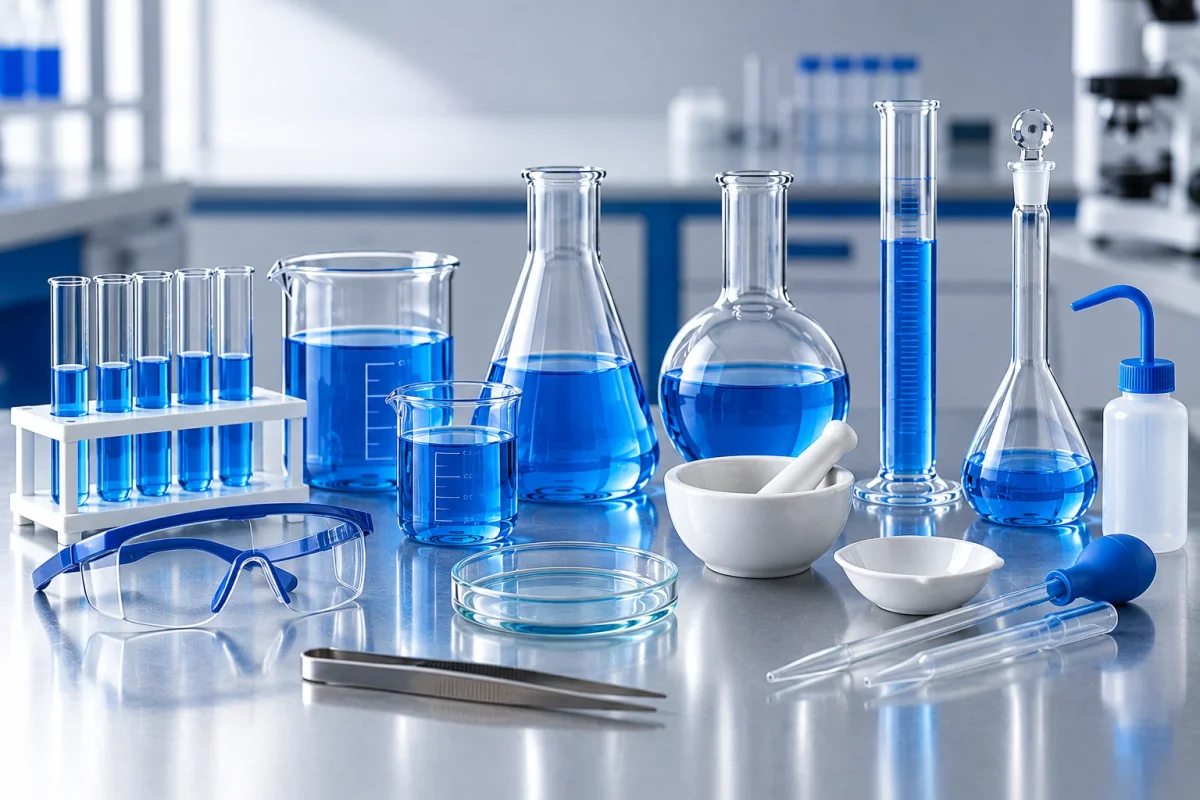
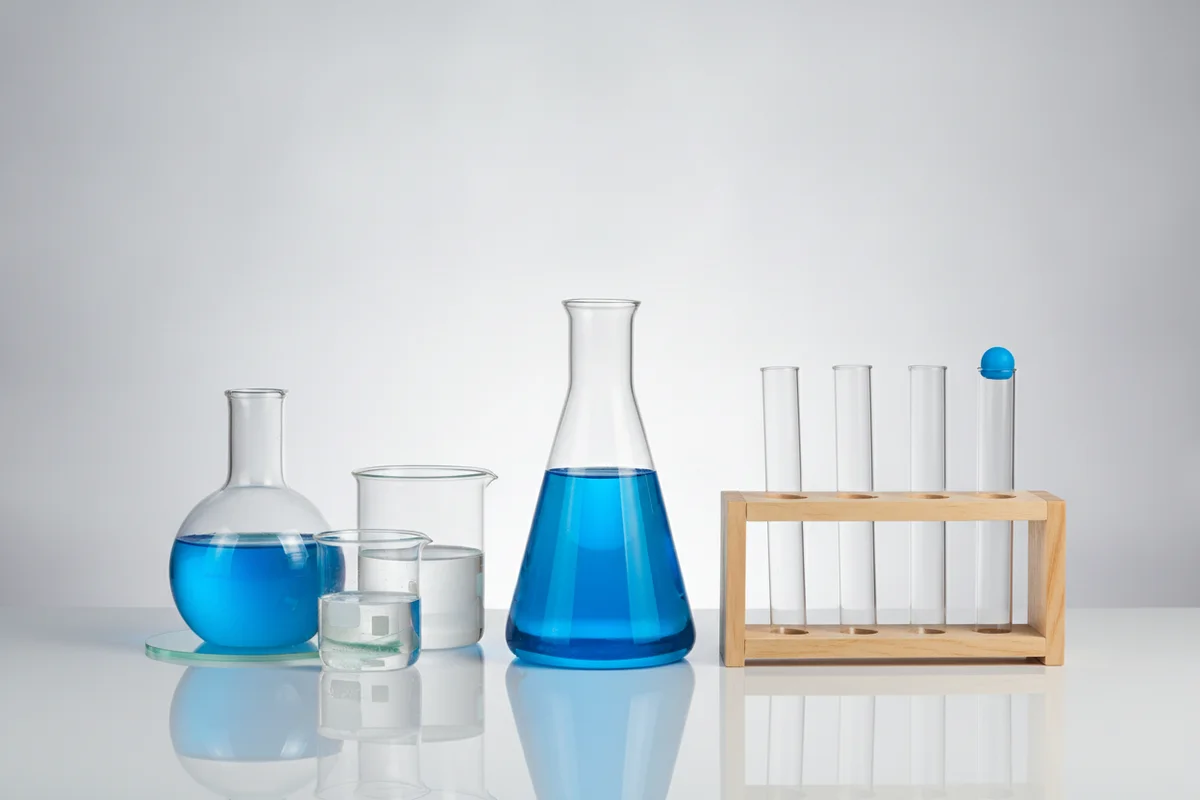
Erlenmeyer flasks — workhorses for titration, solution preparation, and boiling. A [Erlenmeyer flask] has a wide base and narrow neck: less evaporation, easier mixing. At the start, you'll most often need 100, 250, and 500 mL sizes.
Lab beakers — for weighing, dissolving, and pouring. Choose low-form beakers in 50, 100, 250, 400, and 600 mL: the low shape is more stable and easier to work with using a glass rod and magnetic stir bar.
Lab test tubes — for sampling, qualitative reactions, and small-volume centrifugation. Glass test tubes are needed where heating is planned; for routine storage, you can cover some of that volume with plastic. Lab funnels are also part of the basic glass set: you can't filter or transfer without them.
Add a couple of desiccators or jars with ground-glass lids for reagents that need protection from moisture. The rest comes down to the methods your lab will be running in its first months.
Volumetric Glassware and Accuracy Classes: What to Buy Now vs. Later
Volumetric glassware comes in two accuracy classes. Class A has tighter tolerances and is suitable for quantitative analysis and preparing standard solutions. Class B is used for teaching and auxiliary work where higher error is acceptable. Dimensional and tolerance requirements for volumetric flasks are specified in [ISO 1042](https://ru.wikipedia.org/wiki/ISO_1042), while general requirements for lab glassware are covered by GOST standards.
At the start, it makes sense to get [volumetric flasks] of Class A in 100, 250, and 500 mL, 2–3 of each volume: they're needed for calibration solutions. Graduated cylinders and measuring cups are usually bought in Class B — they're the workhorse for measuring volumes during sample prep. Pipettes and burettes are purchased for specific methods: there's no universal size here. The ISO 9001 mark on supplier documents confirms that production and supply follow a controlled procedure.
| Item | Class | Why you need it right away |
|---|---|---|
| Volumetric flasks 100/250/500 mL | A | Calibration and standard solutions |
| Graduated cylinders 100/500 mL | B | Sample prep, volume transfer |
| Pipettes | Per method | Precise dispensing in analysis |
| Burettes | Per method | Titration |
Volumetric glassware accuracy is checked upon receipt and accounted for during calibration. If the class isn't confirmed by documents, it's best not to use that glassware for quantitative methods.
Plastics and Accessories: Racks, Wash Bottles, Funnels
Plastic labware covers tasks where glass is inconvenient: sample storage, reagent dispensing, working with hydrofluoric acid, disposable operations. Polypropylene beakers and bottles are cheaper than glass and don't break, but they're not suitable for heating or aggressive solvents. For long-term storage of volatile substances, use glass with a ground-glass lid.
Accessories are often left out of the essential lab glassware kit, but work grinds to a halt without them.
- Test tube racks — hold tubes upright and free up your hands.
- Wash bottles — for rinsing precipitates and glassware with distilled water.
- Glass and plastic funnels — for filtration and transfer.
- Petri dishes — if you plan microbiological or culture work.
- Brushes and bottle brushes — without them, proper cleaning is impossible.
Match funnels to your filter diameter and racks to the number of tubes per shift. That's cheaper than having to replace an inconvenient format later.
How Many Units and What Volumes to Buy at the Start
The guideline for a lab of 2–5 employees isn't "one per person" but a shift's worth of backup, factoring in washing. Work shouldn't stop while glassware dries. A practical starter plan:
| Item | Volumes | Quantity |
|---|---|---|
| Erlenmeyer flasks | 100, 250, 500 mL | 4–6 of each volume |
| Lab beakers | 50–600 mL | 4–5 per volume |
| Glass test tubes | 10–20 mL | 20–30 |
| Volumetric flasks | 100, 250, 500 mL | 2–3 of each volume |
| Graduated cylinders | 100, 500 mL | 2 of each volume |
| Funnels | Medium diameter | 4–6 |
Count not only active workstations but also the washing cycle: if glassware is washed once per shift, your stock must cover a full day. For methods with long solution standing times, add separate flasks for storage.
The kit's cost comes down to glass volume, accuracy class, and the number of items: Class A volumetric glassware is noticeably more expensive than general-purpose glassware, so keep its share of the purchase minimal. For an exact quote on a specific list of volumes, LPS UZ can confirm upon request; check current prices with the supplier. If you need all lab glassware in Tashkent, request the full price list.
Essential Lab Glassware Kit: What You Can Defer Until You Expand
Your initial purchase shouldn't try to cover every possible scenario. Some items are wisely deferred for 3–6 months, once you know which methods bring in the money.
You can defer specialized volumetric glassware: non-standard burettes, pipettes for specific analyses, volumetric flasks in rare volumes. Don't rush into large series of glassware: five identical 2 L flasks rarely pay off if you need that volume once a month.
Another candidate for later is specialty glassware: Kjeldahl flasks, desiccators, separatory funnels, Soxhlet extractors. Buy them for a specific method, not "just in case." The rule is simple: if you can get through your first shift without an item, it doesn't belong in the essential kit.
| Buy now | Defer |
|---|---|
| Erlenmeyer flasks 100–500 mL | 1–2 L flasks in bulk |
| Beakers, test tubes, funnels | Specialty glassware for rare methods |
| Class A volumetric flasks, cylinders | Burettes and pipettes in non-standard volumes |
How to Receive Glassware on Delivery and How to Store It
Receiving saves money: catching broken glass and tolerance defects at unpacking is cheaper than a month later. The checks are simple and require no instruments.
- Inspect the batch for chips and cracks right at unpacking: any chip on volumetric glassware is grounds for replacement.
- Verify the class and nominal volume marking on each volumetric flask against the invoice.
- Check ground-glass joints: the lid and joint should seat evenly without wobble.
- Inspect the graduations: lines should be even, without smudged divisions.
- Make sure the volumetric glassware states the calibration temperature (e.g., 20 °C).
Store glass on shelves with a lip, separate from reagents, so spilled liquids don't reach the glassware. Keep volumetric glassware in cases or drawers to avoid tossing it into a communal drawer. Wash glassware with mild detergent and warm water, avoiding sudden temperature changes: manufacturer recommendations, e.g., from [Duran](https://www.duan.com) and [Simax](https://www.simax.cz), agree that hot glassware should not be immediately placed under cold water.
After washing, dry volumetric glassware at room temperature upside down. Avoid heating it in a drying oven: the markings are applied under specific conditions, and calibration may drift.
Frequently Asked Questions
Can I start a lab with plastic glassware?
Partly yes, if your methods don't require heating or high accuracy. But you can't do without glass flasks, beakers, and test tubes: plastic can't handle heat or aggressive solvents, and its volumetric accuracy is lower.
Is calibration of volumetric glassware mandatory?
For quantitative analysis and accredited methods, yes, volumetric glassware must be calibrated or verified. For auxiliary work, Class B glassware without calibration is acceptable if the method allows it.
How many units of glassware are enough for one employee?
At minimum, 2–3 flasks and beakers per shift, plus backup for washing. For a team of 2–5 people, use the table above: 4–6 flasks of each volume and 4–5 beakers cover a standard shift.
What should I do with broken glassware upon delivery?
Document the damage at unpacking, take photos, and file a claim with the supplier before signing the invoice. Having the markings and packaging simplifies replacement.
Where can I buy lab glassware in Tashkent and how long does delivery take?
In Tashkent, it's easiest to order lab glassware from a supplier with a local warehouse: stock items ship in 1–3 days, rare volumes and specialty glass in 2–4 weeks. Before ordering, confirm the availability of the required volumes and accuracy class so you don't end up assembling a set from two batches.
A Practical Example: How a 3-Person Lab Stayed Within Budget
Let's take a typical case: a commercial water quality control lab with 3 employees, 8–10 methods per week, some colorimetric and some titrimetric. Before purchasing, they listed their methods and noted which volumes and accuracy classes each procedure mentioned. Then they calculated not "how much glassware is needed overall" but "how many operations run in parallel per day."
A shift lasts 8 hours. One 250 mL Erlenmeyer flask handles a titration cycle in about 40–50 minutes including washing and drying. If two employees titrate 5 samples in parallel, you need 8–10 flasks in rotation, not two. For volumetric flasks, the calculation is simpler: standard solutions are prepared a week ahead, so 1–2 Class A flasks per volume from the methods (100, 250, 500 mL) suffice. That gives you the starter minimum, which only grows from there.
Example budget in rough terms: 20 Erlenmeyer flasks 100–500 mL, 30 beakers 50–250 mL, 100 test tubes, 6 Class A volumetric flasks, 2 cylinders, funnels, wash bottles, racks. If you start with Class A only where the method requires it, the cost difference for volumetric glassware is noticeable: Class B costs less, but it can only be used for preparatory operations. Overpaying starts when Class A is bought "just in case" for pouring and auxiliary work.
Mistake → Consequence → How to Avoid: Five Typical Pitfalls on Your First Order
Most problems don't show up on delivery day but a month or two into operation, when it turns out the glassware doesn't match the methods or fails tolerances. Here are the most common ones.
| Customer mistake | Consequence | How to avoid |
|---|---|---|
| "Let's get everything Class A to be safe" | Overpaying for accuracy class where it's not needed | Note the accuracy class from each method and buy strictly according to it |
| "One flask per volume is enough" | Shift downtime, samples queuing for washing | Calculate based on the number of parallel operations and turnaround time |
| Ordering without checking the batch for breakage and defects | Write-offs and re-purchasing at your own expense | Inspect upon delivery and verify tolerances |
| Glassware without considering heat and aggressive media | Cracks, loss of accuracy, employee risk | Check heat resistance and chemical resistance against method conditions |
| No reserve for breakage and wear | Unplanned orders and missed analysis deadlines | Keep a 10–15% reserve for fragile items |
A note on glassware calibration: if your lab is accredited or working toward it, check in advance whether volumetric glassware needs verification and which documents are required. Class A glassware usually comes with a certificate of conformity, but verification requirements depend on your scope of accreditation, so settle this before you buy, not after. Keep certificates and batch passports on file: inspectors ask for them first.
Bottom line
Put together a starter set of 100–500 ml Erlenmeyer flasks, beakers, test tubes, Class A volumetric flasks and cylinders, then add funnels, wash bottles and racks. That's enough to get 2–5 people up and running, and you can buy specialized glassware later for specific methods. At LPS UZ you can source glass and plastic labware, including borosilicate glass items, with delivery across Tashkent and the regions of Uzbekistan: send us your list of volumes and quantities to [buy laboratory glassware](/contacts) with advice on putting together your set and pricing details. See the catalog and more details at [LPS UZ](/).