 Labware
What Analyses Require Porcelain Crucibles and Dishes

Porcelain crucibles and dishes are the workhorses for ignition, ashing, and gravimetric analysis. No sample preparation in laboratories across Tashkent and Uzbekistan is complete without them. Many people think a crucible is just a 'container for heating' and grab whatever comes to hand. As a result, the sample sinters, the mass drifts, and the analysis has to be redone. Let's break down step by step what analyses actually need porcelain crucibles, how to choose the right size, and how to prepare the glassware so you don't ruin your measurements.
What is a porcelain crucible and how does it differ from glass?
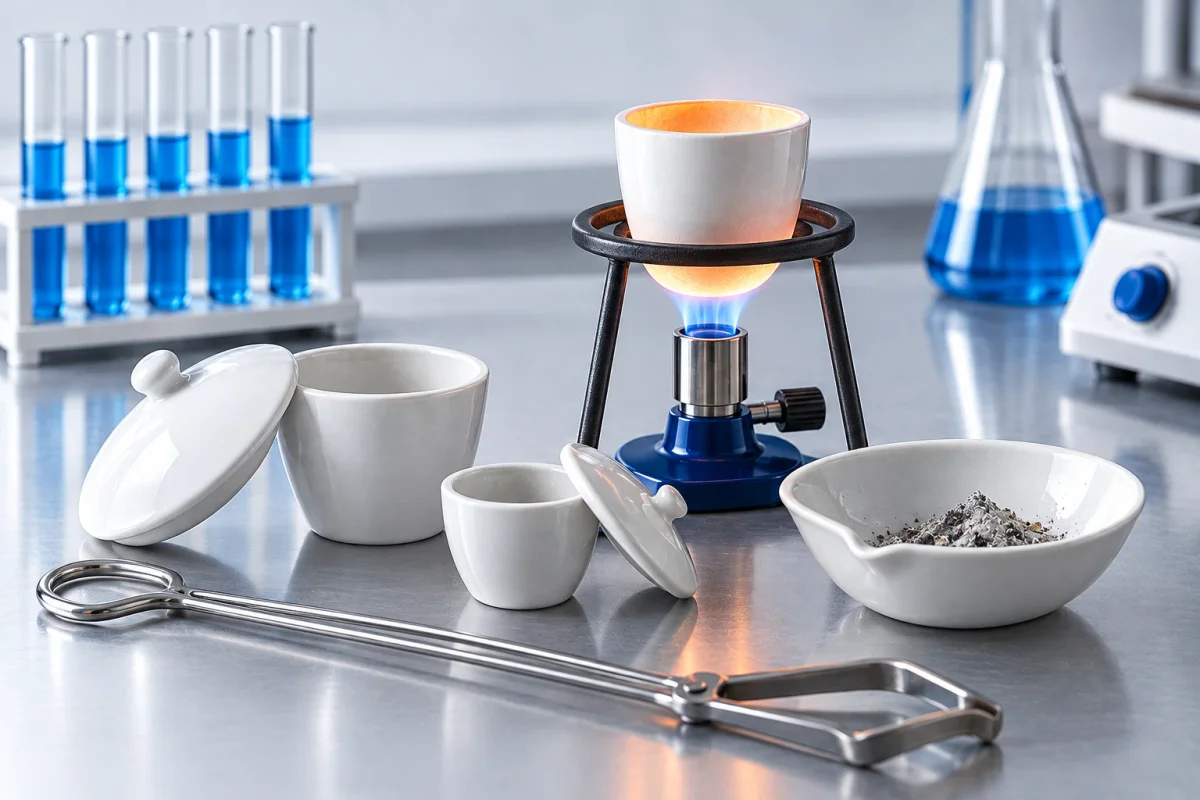
A porcelain crucible is a thick-walled vessel made of porcelain that withstands repeated heating to high temperatures and sudden temperature changes if they are properly equalized. The inner surface is glazed, so the sample doesn't stick and isn't contaminated by breakdown products of the material.
A glass crucible or weighing bottle is unsuitable for ignition: ordinary glass softens at temperatures that are routine for porcelain. Even heat-resistant glass isn't designed for prolonged ashing at 800–1000 °C. Porcelain handles such conditions, but always check the exact limits in the certificate for the specific batch.
Porcelain also differs from metal crucibles. Metal can react with acids and ash, while porcelain is chemically inert in most procedures. That's why when the standard calls for ignition, you choose porcelain labware.
What analyses require porcelain crucibles: ignition and ashing
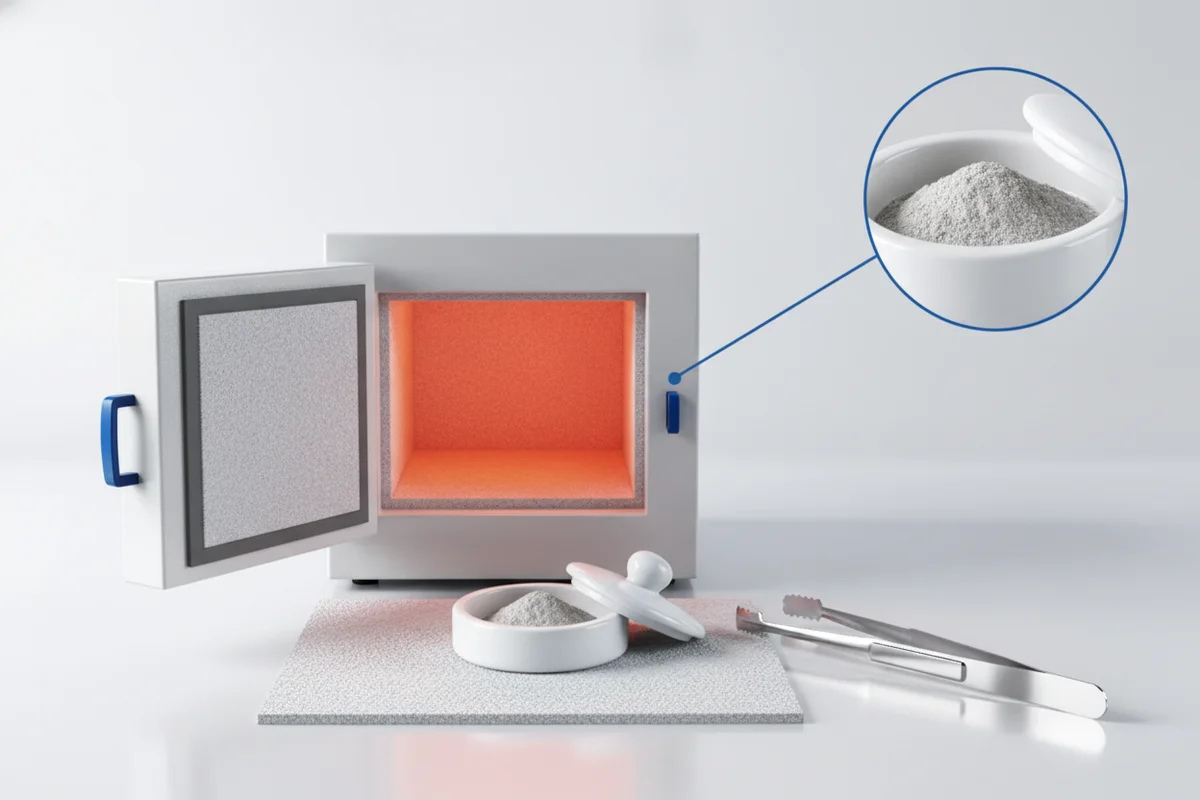
The first and most common case is determining loss on ignition. A sample is placed in a crucible, held in a muffle furnace at a set temperature, cooled in a desiccator, and weighed. The mass difference indicates the content of volatile components, moisture, or organics. This is the most frequent use case for porcelain crucibles — loss on ignition testing.
The second case is ashing. This is sample preparation for further analysis: plant material, food products, feed, soil, waste. Organics are burned off, and the ash remains in the crucible, then dissolved and analyzed. For such methods, the crucible's resistance to repeated heating and cooling cycles is crucial.
The third case is gravimetric analysis. Here the crucible serves as a container for the precipitate, which is dried or ignited to constant mass. Accuracy depends on how stable the crucible's own mass is, so it is first brought to constant mass.
Less commonly, porcelain crucibles are used for fusion with fluxes, but only if the method explicitly allows it and the flux doesn't attack the glaze. In all these cases, the porcelain crucible must match the method in volume and shape.
Evaporating dishes: when to use a dish and when a crucible
An evaporating dish is a flat-bottomed vessel with a wide mouth. Its job is to let liquid evaporate while the residue stays at the bottom. The wide surface speeds up evaporation, so you use a dish when you need to concentrate a solution or dry a sample.
A crucible, on the other hand, is tall and narrow. It's used for ignition and ashing, where uniform heating and minimal losses during transfer are important. If you evaporate in a crucible, the process is slower, and the walls get dirty faster.
A simple rule: evaporation, concentration, drying — use a dish. Ignition, ashing, gravimetric analysis — use a crucible. For grinding samples, use a mortar and pestle, also made of porcelain, to avoid metal contamination.
Labs often need both items at once. That's why porcelain dishes and crucibles are purchased as a set: crucibles of various volumes, dishes, mortars, lids, and tongs for transfer. Related items are supplied together with [sample preparation equipment](/categories/117-general-laboratory-equipment).
Crucible preparation rules: washing, ignition, bringing to constant mass
Preparation of porcelain glassware starts with washing. A new crucible is washed with water, then with dilute acid if the certificate allows, and rinsed with distilled water. Avoid aggressive mixtures that can damage the glaze.
After washing, the crucible is dried and ignited in a muffle furnace at the method's temperature. Then it is cooled in a desiccator to room temperature and weighed. The cycle 'ignition → cooling → weighing' is repeated until the difference between the last two weighings is less than the tolerance specified in the method. This is what bringing the crucible to constant mass means.
Practical check: handle the cooled crucible with clean tweezers or tongs. Fingerprints add grease and change the mass. If after three cycles the mass keeps drifting, look for the cause: contamination, moisture in the desiccator, or a balance malfunction.
Store prepared crucibles in a closed cabinet or desiccator to keep dust off the walls. Before each analysis, check that the crucible is dry and free of cracks.
Sizes and shapes: low, tall, with lid, conical
Choosing the crucible size starts with the sample weight. It must hold the sample with extra room so that foaming or spattering doesn't cause it to overflow. For routine ash samples, small to medium crucibles are usually used; for larger samples, bigger ones.
Shape affects heating and handling. A low crucible is more convenient for ashing when a large contact area with air is needed. A tall crucible better contains the sample during foaming. A conical one is used in methods where stability on a stand is important.
Crucibles with lids aren't always needed. For ashing without air access or ignition with possible splashing, a lid is essential. In gravimetry, a lid is often used to keep the crucible clean during transfer, but then its mass is accounted for separately.
| Type | When to choose | What to check |
|---|---|---|
| Low crucible | Ashing, large evaporation area | Stability, glaze without chips |
| Tall crucible | Ignition with foaming | Volume margin |
| With lid | Ashing without air access, dust protection | Fit tightness |
| Conical | Methods with a fixed stand | Compliance with certificate |
| Evaporating dish | Evaporation, drying | Bottom diameter and volume |
After choosing the shape, check the method: it often specifies the type and volume of glassware. If the method refers to a standard, open its current edition.
How to choose a porcelain crucible by volume and sample weight: calculation example
Crucible volume is calculated from the sample weight, not from 'how much fits.' Take the sample mass and its bulk density from the method: sample volume = mass ÷ density. Add a 50–100% margin for foaming and spattering.
Example: ash sample 5 g, bulk density 0.8 g/cm³, so the sample occupies about 6.3 cm³. With a 100% margin, you need a crucible of at least 13 cm³, i.e., the nearest standard size of 15–20 mL. For a dish, calculate differently: the volume of liquid you evaporate in one load plus one-third for foaming.
Comparison of guidelines for typical tasks:
| Task | Sample weight | Volume guideline |
|---|---|---|
| Food ash | 2–5 g | Crucible 15–25 mL |
| Soil ignition | 5–10 g | Crucible 25–50 mL |
| Solution evaporation | 50–200 mL liquid | Dish 50–100 mL |
| Gravimetric precipitate | 0.1–1 g | Crucible 10–15 mL with lid |
Common mistakes: temperature shock, reagent residues, mass loss
Mistake: 'I'll put the hot crucible on a cold bench to cool faster.' A sudden temperature change causes cracks, and the crucible may break right in the furnace. How to avoid: cool on a ceramic pad or in a desiccator, following the method.
Mistake: 'I rinsed with water, that's enough.' Reagent residues or finger grease distort the mass and give false results. How to avoid: wash according to the protocol, dry, and ignite to constant mass.
Mistake: 'I'll weigh right after the furnace.' A hot crucible on the balance gives incorrect readings and can damage the balance. How to avoid: cool in a desiccator to room temperature.
Mistake: 'I'll take a crucible without volume margin.' The sample is lost during foaming. How to avoid: choose a volume with margin and test the sample's behavior in a blank run.
Frequently asked questions
Can a porcelain crucible be ignited in a muffle furnace and up to what temperature?
Yes, laboratory porcelain is designed for ignition in a muffle furnace. The specific temperature limit is stated in the product certificate and the analysis method. Do not exceed it and avoid sudden temperature changes.
How does a porcelain crucible differ from a quartz one, and when is porcelain the right choice?
Quartz glass is transparent and better withstands very high temperatures, but it is more expensive and less resistant to alkaline melts. Porcelain is chosen for routine ignition and ashing where transparency is not needed.
How to prepare a crucible for gravimetric analysis to ensure accurate results?
Wash, dry, ignite at the method's temperature, cool in a desiccator, and bring to constant mass through repeated cycles. Work with gloves or tongs.
Is a lid needed for a crucible, and in which analyses is it mandatory?
A lid is mandatory for ashing without air access and for igniting samples prone to splashing. If the method doesn't require a lid, it is used to protect from dust during transfer.
What volume of crucible and dish should I choose for typical samples?
Choose a volume so that the sample occupies no more than half the crucible for ignition and no more than one-third for foaming samples. For a dish, base your choice on the volume of liquid to be evaporated in one load.
How to keep a crucible log and not lose sample numbers
In gravimetry, a crucible is a unit of account, not a consumable to be guessed at. Each crucible goes through a cycle: washing → ignition → cooling in a desiccator → weighing → sample loading → back to the furnace. If the numbers get mixed up, the ash or loss-on-ignition result is worthless: the empty crucible mass cannot be recovered.
Keep a simple log in a notebook or spreadsheet with columns: crucible number, ignition date, temperature, empty mass, mass with sample, mass after. Apply the number to the bottom of the crucible with a fine needle or ceramic pencil before first use, because chalk and marker burn off during ignition.
| What to record | How often | Norm |
|---|---|---|
| Empty crucible mass | Before each series | Difference between weighings ≤0.0005 g |
| Ignition temperature | Each cycle | Per method, for ash usually 500–600 °C |
| Number of use cycles | Continuously | Replace if chipped, cracked, or glaze becomes cloudy |
| Sample residue after analysis | Each sample | Crucible washed and dried before next cycle |
Practical check: weigh the same empty crucible three times with a 24-hour interval. If the spread is more than 0.001 g, the crucible has absorbed moisture or reagents — it's time to re-ignite or replace it. Keep records by batch: one batch of crucibles — one log sheet, making it easier to track defects.
What to check when receiving porcelain crucibles and dishes
Defects aren't always visible: a microcrack in the glaze is noticed only in the furnace when the crucible splits and the sample mixes with shards. Inspect upon receipt in daylight, before first heating.
Checks that take 5–10 minutes per batch:
- Inspect the glaze: the surface should be free of bubbles, lumps, and hairline cracks. Run a fingernail along the rim — snags indicate a chip.
- Tap the bottom against another: clean porcelain gives a high ring, a cracked one a dull thud.
- Place on a flat tile: the crucible should not wobble. A warped bottom causes uneven heating and tilting during weighing.
- Check geometry and mass: for crucibles of the same size, mass variation of a couple percent is acceptable. If the spread is larger, the batch is inconsistent in wall thickness.
Red flags: an evaporating dish with internal lumps on the bottom (precipitate sticks and is lost during transfer), a crucible with a lid that doesn't seat tightly, traces of grinding the rim with sandpaper. Don't buy such glassware: the defect will show up exactly when you're igniting an expensive sample.
How to choose and order porcelain glassware for the lab
Start with an inventory of methods: list the standards used and the types of crucibles and dishes they specify. Then check which items you already have and their condition. Crucibles with cracks, chipped glaze, or traces of previous samples are best taken out of service.
When ordering, specify volume, shape, lid availability, and material. If the method refers to a GOST, state this in the request. Manufacturers and [brands](/brands) available for order are listed in a separate section. For routine series, [class A and B volumetric glassware](/blog/mernaya-posuda-klassa-a-i-b) is suitable, covering adjacent analysis steps.
To select porcelain glassware and consumables, send a list of methods and volumes. LPS UZ specialists will help match items with certificates and prepare a commercial proposal, and [contact details](/contacts) are on the website. If you need [crucibles for the laboratory in Tashkent](/categories/117-general-laboratory-equipment), specify volumes and sizes in your request.